


- Focus and Scope
- Section Policies
- Peer Review Process
- Publication Frequency
- Open Access Policy
- Archiving
- Publication Ethics
- Retraction Policy
- Withdrawal Policy
- Correction Policy
- Plagiarism Policy
- Licensing Policy
- Copyright Transfer Agreement
- Research Misconduct
- Post Publication Discussion
- Ownership & Management
- Manuscript Type
- Conflict of Interest
- Inclusion & Indexing
- Artificial Intelligence (AI) Policy
Focus and Scope
The scope of this journal is the integration of technology, pedagogy and science content in its implementation in science learning, curriculum, media, technology, students, teachers and education personnel, assessment, evaluation, development, and policies related to science subjects.
Section Policies
Articles
 Open Submissions |
Indexed |
Peer Reviewed |
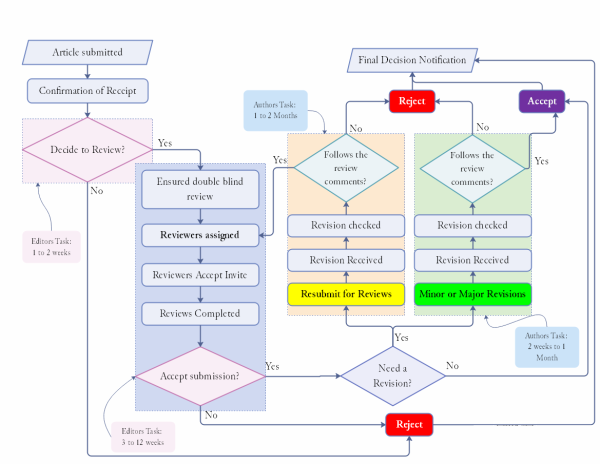
Peer Review Process
All research articles in Jurnal TPACK IPA undergo double-blind peer review: reviewers do not know the authors' identities, and authors do not know the reviewers' identities.
- Initial screening (about 7 days). The editor checks the manuscript for fit with the focus and scope, use of the journal template, basic methodological soundness, and similarity level (Turnitin, see Plagiarism Policy). Manuscripts that fail this stage are returned or rejected without review.
- Peer review (2–4 weeks). Manuscripts that pass screening are sent to at least two reviewers with expertise in the topic, from institutions other than the authors'. Reviewers assess originality, relevance to science education and TPACK, methodological rigour, clarity of results and discussion, and quality of references.
- Recommendations. Reviewers recommend one of: accept, minor revision, major revision, or reject. If the two reviewers disagree strongly, the editor may invite a third reviewer.
- Revision. Authors revise according to reviewer comments and submit a response letter. Revisions are due within 2 weeks (minor) or 4 weeks (major). Major revisions may be sent back to the reviewers.
- Decision. The Editor in Chief makes the final decision based on the reviewers' recommendations and an editorial meeting. A revised manuscript is not guaranteed acceptance.
- Production. Accepted manuscripts go through copyediting, layout, and proofreading by the authors before publication.
The process from submission to first decision typically takes 8–12 weeks. Reviewers and editors with a conflict of interest must decline to handle the manuscript. Manuscripts authored by members of the editorial team are handled by another editor, with the same blind review.

Publication Frequency
Jurnal TPACK IPA is published twice a year: Number 1 in January and Number 2 in August. Submissions are open throughout the year. Accepted articles are published in the next available issue, in order of acceptance.
Open Access Policy
This journal is an open-access journal that provides immediate, worldwide, barrier-free access to the full text of all published articles without charging readers or their institutions for access. Readers have the right to read, download, copy, distribute, print, search, or link to the full texts of all articles in the Jurnal TPACK IPA. This journal provides immediate open access to its content on the principle that making research freely available to the public supports a greater global exchange of knowledge.
Archiving
This journal utilizes the LOCKSS system to create a distributed archiving system among participating libraries and permits those libraries to create permanent archives of the journal for purposes of preservation and restoration. More...
Publication Ethics
Jurnal TPACK IPA is committed to maintaining the highest standards of publication ethics and research integrity. The journal follows the COPE Core Practices and the Principles of Transparency and Best Practice in Scholarly Publishing. The Editorial Board is responsible for establishing and implementing procedures to prevent and address publication misconduct. Plagiarism, data fabrication, data falsification, duplicate publication, inappropriate authorship, and other forms of publication misconduct are unacceptable.
By submitting a manuscript, authors confirm that the work is original, has not been published previously in whole or in part, and is not under consideration for publication elsewhere, except where prior dissemination has been disclosed and explicitly permitted by the journal.
A. EDITORIAL AND PUBLICATION PROCESS
1. All manuscripts undergo editorial screening and, if suitable, peer review by at least two reviewers with relevant expertise.
2. The journal uses a double-blind peer-review process.
3. Manuscripts are evaluated for relevance, methodological soundness, originality, significance, clarity, ethical compliance, and alignment with the journal’s scope.
4. Editorial decisions may include acceptance, minor revision, major revision, or rejection.
5. An invitation to revise and resubmit does not guarantee acceptance.
6. Rejected manuscripts are not reconsidered unless an appeal is submitted under the journal’s appeals procedure or the Editor-in-Chief determines that reconsideration is justified.
7. Editorial decisions must comply with applicable laws, copyright requirements, and ethical standards.
8. Manuscripts must not be submitted simultaneously to another journal. Substantial overlap with previously published work must be disclosed and justified.
B. AUTHORS’ RESPONSIBILITIES
1. Authors must ensure that submitted work is original and accurately represents the research conducted.
2. Authors must not submit manuscripts that have been published previously or are under consideration elsewhere, subject to the journal’s policies on permitted prior dissemination.
3. All listed authors must have made substantial scholarly contributions, approved the final manuscript, and agreed to be accountable for their contributions and the integrity of the work.
4. Individuals who do not meet authorship criteria should be acknowledged appropriately, with their permission.
5. Changes to authorship or author order after submission require a justified request and written agreement from all affected authors, subject to editorial approval.
6. Authors must ensure that data, methods, results, images, and other research materials are accurate and honestly reported. Fabrication, falsification, and misleading manipulation are prohibited.
7. Authors must cite relevant sources accurately and obtain permission for third-party material when required.
8. Authors must disclose funding sources, relevant competing interests, and any other information necessary to assess the research fairly.
9. Authors must provide ethics approval information, participant consent statements, and relevant institutional permissions where applicable.
10. Authors are encouraged to include a data availability statement and must provide supporting data or documentation when reasonably requested for the assessment of research integrity, subject to privacy, confidentiality, legal, and ethical restrictions.
11. Authors must promptly notify the Editor-in-Chief if they discover a significant error in a submitted or published article and cooperate with appropriate corrections or retractions.
12. Authors must disclose the use of generative AI or AI-assisted tools where required by the journal’s AI policy. AI tools cannot be listed as authors, and authors remain responsible for the accuracy, originality, citations, and integrity of the manuscript.
C. REVIEWERS’ RESPONSIBILITIES
1. Reviewers must treat manuscripts and all related information as confidential and must not use unpublished material for personal advantage.
2. Reviews must be objective, constructive, and supported by clear scholarly reasoning.
3. Reviewers should identify relevant published work that has not been cited and provide sufficient information to support their suggestions.
4. Reviewers should notify the editor of suspected plagiarism, substantial overlap, unreliable data, or other potential ethical concerns.
5. Reviewers must disclose any competing interests and decline to review manuscripts when a conflict could compromise their impartiality.
6. Reviewers must not delegate a review or upload confidential manuscript content to external services, including AI tools, without prior authorization from the journal and appropriate safeguards.
7. Reviewers must submit reviews within the agreed timeframe or promptly inform the editor if they cannot do so.
D. EDITORS’ RESPONSIBILITIES
1. Editors are responsible for making fair, independent, and timely editorial decisions based on scholarly merit, originality, methodological quality, ethical compliance, and relevance to the journal’s scope.
2. Editorial decisions must not be influenced by authors’ nationality, ethnicity, gender, institutional affiliation, religion, political views, or personal relationships.
3. Editors must maintain the confidentiality of submitted manuscripts and protect reviewer anonymity in the double-blind review process, except where disclosure is authorized or required.
4. Editors must identify and manage competing interests and must not handle manuscripts in which they have a conflict. Such manuscripts should be assigned to an independent editor.
5. Editors must not use unpublished information from submitted manuscripts for their own research or personal advantage without written permission.
6. Editors must ensure that appropriate peer review and ethical oversight are conducted and that funding and competing-interest disclosures are considered.
7. Editors must investigate credible allegations of misconduct in published and unpublished work fairly and confidentially. Authors must be given an appropriate opportunity to respond.
8. Editors must not conclude that misconduct has occurred solely on the basis of suspicion; concerns must be assessed using relevant evidence and a fair process.
9. Editors must publish corrections, expressions of concern, or retractions when warranted to preserve the accuracy and integrity of the scholarly record.
10. Editors must not reverse previous editorial decisions without a documented and defensible reason.
11. Editors must ensure that editorial policies are publicly available, consistently applied, and periodically reviewed.
E. PLAGIARISM, DUPLICATE PUBLICATION, AND RESEARCH MISCONDUCT
Jurnal TPACK IPA does not tolerate plagiarism, self-plagiarism that misrepresents previously published material as new, duplicate publication, fabricated data, falsified data, manipulated images, citation manipulation, or other forms of research and publication misconduct.
The journal may use appropriate similarity-checking tools and editorial assessment to identify potential problems. Similarity scores alone do not establish plagiarism; the context, source material, and nature of the overlap must be assessed.
When concerns arise, the journal will assess the available evidence, contact the relevant authors where appropriate, allow a reasonable opportunity to respond, and seek further information from institutions or other responsible parties when necessary. Appropriate actions may include requesting clarification or revised material, rejecting a manuscript, issuing a correction or expression of concern, retracting a published article, or notifying the relevant institution. Actions will be proportionate to the findings and consistent with applicable COPE guidance.
F. COMPLAINTS AND APPEALS
Authors may appeal an editorial decision when they believe that a significant factual misunderstanding, procedural error, or demonstrable bias affected the decision. Appeals must provide clear reasons and supporting information and should be submitted to the Editor-in-Chief within the timeframe specified by the journal.
An appeal will be assessed objectively. Where practicable, it will be considered by an editor who was not responsible for the original decision. An appeal does not guarantee that a manuscript will be reconsidered or accepted.
Complaints concerning editorial conduct, peer review, publication practices, or alleged breaches of ethical policy may be submitted to the Editor-in-Chief. Complaints involving the Editor-in-Chief should be referred to the journal’s publisher or an appropriate independent representative. The journal will handle complaints confidentially, investigate them fairly, and communicate the outcome where appropriate.
G. CONFLICTS OF INTEREST AND FUNDING
Authors, reviewers, and editors must disclose financial, professional, personal, institutional, or other relationships that could reasonably be perceived to influence their work or decisions.
The journal will assess disclosed conflicts and take appropriate steps, including assigning an independent editor or reviewer, requesting additional disclosure, or declining to handle a submission where necessary. Funding sources and the role of funders in the research, analysis, writing, and publication process must be reported where applicable.
H. ETHICAL OVERSIGHT AND RESEARCH PARTICIPANTS
Research involving human participants, identifiable personal information, or other ethically sensitive materials must comply with applicable laws, institutional requirements, and recognized ethical principles.
Where required, authors must provide the name of the approving ethics committee or institution, the approval reference, and relevant informed-consent information. Research involving children or other potentially vulnerable participants must include appropriate safeguards and parental or guardian consent where required, as well as participant assent where applicable.
Authors must explain any applicable exemption from formal ethics review when relevant. Editors may request additional documentation when needed. Identifiable participant information must not be disclosed without an appropriate legal and ethical basis and the necessary consent.
I. DATA AVAILABILITY AND REPRODUCIBILITY
Authors are encouraged to provide a data availability statement indicating whether the data supporting their findings are publicly available, available upon reasonable request, or subject to restrictions.
Data sharing must respect participant privacy, confidentiality, intellectual property, and applicable legal and ethical requirements. Authors must not fabricate, falsify, or selectively misrepresent research data. Editors may request relevant supporting data or documentation when necessary to assess the validity or integrity of a manuscript.
J. INTELLECTUAL PROPERTY AND COPYRIGHT
Authors must ensure that their submissions do not infringe copyright or other intellectual property rights. Permission must be obtained for third-party material where required, and sources must be properly acknowledged.
Copyright ownership, publication rights, and reuse permissions are governed by the journal’s published copyright and licensing terms and the applicable author agreement. These documents must be consistent with each other. Authors are responsible for reviewing the applicable terms before publication.
K. USE OF GENERATIVE AI AND AI-ASSISTED TOOLS
Authors remain fully responsible for the accuracy, originality, integrity, and proper citation of their manuscripts, including content produced or assisted by AI tools. AI tools must not be listed as authors. Where AI tools have been used in ways that materially contribute to the manuscript’s content or analysis, authors must disclose such use in accordance with the journal’s submission instructions. AI tools must not be used to fabricate data, references, research results, peer-review reports, or other scholarly evidence.
Editors and reviewers must protect manuscript confidentiality and must not enter confidential submissions into external AI systems unless the journal has expressly authorized the use and appropriate confidentiality and data-protection safeguards are in place.
L. CORRECTIONS, EXPRESSIONS OF CONCERN, AND RETRACTIONS
Jurnal TPACK IPA is committed to preserving the accuracy and completeness of the scholarly record. If a published article contains a significant error, the journal may publish a correction or other appropriate notice. If there are credible concerns about the reliability or integrity of an article that cannot yet be resolved, an expression of concern may be issued where warranted.
Retraction may be considered when findings are unreliable because of serious error or misconduct, when there has been plagiarism or redundant publication, or when other circumstances substantially undermine the integrity of the published record. Retractions will be clearly identified, linked to the original article, and accompanied by an explanation of the reason to the extent appropriate. The original article will ordinarily remain accessible with a clear retraction notice, preserving the publication record. Removal of content will be reserved for exceptional circumstances, such as legal requirements or serious risks to individuals.
Authors, editors, and readers may notify the journal of suspected errors or concerns. All cases will be assessed fairly and in accordance with applicable COPE guidance.
M. POST-PUBLICATION DISCUSSION
The journal welcomes scholarly discussion and substantiated concerns about published articles. Readers may submit comments or complaints through the journal’s designated contact channel. Submissions will be assessed for relevance, evidence, civility, and compliance with ethical standards. Authors of the article concerned will be given an appropriate opportunity to respond where necessary. The journal may publish a response, correction, expression of concern, or retraction depending on the outcome.
N. CONTENT INTEGRITY AND MAINTENANCE (CROSSMARK POLICY)
Jurnal TPACK IPA recognizes the importance of maintaining the integrity and completeness of the scholarly record. Where Crossmark is implemented for eligible publications, the Crossmark button provides readers with information about the current status of the document and, where available, additional publication-record information.
The journal will record significant updates, corrections, and retractions in accordance with its publication policies and the relevant Crossref services. The use of Crossmark does not replace the journal’s responsibility to investigate concerns or to issue appropriate publication notices.
O. TRANSPARENCY AND POLICY IMPLEMENTATION
The journal makes its editorial and publication ethics policies publicly available and expects authors, reviewers, editors, and editorial staff to comply with them. Policies will be reviewed periodically and updated when necessary. Allegations and disputes will be handled fairly, confidentially, and consistently with applicable ethical standards and COPE guidance.
Retraction Policy
The papers published in the Jurnal TPACK IPA will be considered retracted in the publication if:
They have clear evidence that the findings are unreliable, either as a result of misconduct (e.g., data fabrication) or honest error (e.g., miscalculation or experimental error)
The findings have previously been published elsewhere without proper crossreferencing, permission, or justification (i.e., cases of redundant publication)
It constitutes plagiarism
It reports unethical research
The mechanism of retraction follows the Retraction Guidelines of the Committee on Publication Ethics (COPE), which can be accessed at https://publicationethics.org/files/retraction%20guidelines.pdf.
Withdrawal Policy
Jurnal TPACK IPA does not charge any fee or penalty for the withdrawal of a manuscript.
- Authors who wish to withdraw a submitted manuscript must send a written request, stating the reason, to the Editor in Chief at tpack-ipa@uny.ac.id. The request must be signed by the corresponding author.
- Withdrawal is possible before the manuscript is published. Because editors and reviewers have invested time in the review, authors are asked to withdraw only for a serious reason.
- A manuscript cannot be withdrawn after publication. Published articles are handled under the Correction Policy and the Retraction Policy.
- An article published as "Article in Press" that contains errors, is found to be an accidental duplicate, or violates our publication ethics (such as multiple submission, bogus authorship claims, plagiarism, or fraudulent use of data) may be withdrawn by the editors. The article content is then replaced with a notice stating that it has been withdrawn.
Correction Policy
Jurnal TPACK IPA will consider issuing a correction if:
A small part of an otherwise reliable publication reports flawed data or proves to be misleading, especially if this is the result of honest error.
The Author or Contributor list is incorrect (e.g. a deserving Author has been omitted or someone who does not meet authorship criteria has been included).
Corrections to peer-reviewed content fall into one of three categories:
Publisher correction (erratum): to notify readers of an important error made by publishing/journal staff (usually a production error) that has a negative impact on the publication record or the scientific integrity of the article, or the reputation of the Authors or the journal.
Author correction (corrigendum): to notify readers of an important error made by the Authors which has a negative impact on the publication record or the scientific integrity of the article, or the reputation of the Authors or the journal.
Addendum: an addition to the article by its Authors to explain inconsistencies, to expand the existing work, or otherwise explain or update the information in the main work.
The decision of whether a correction should be issued is made by the Editor(s) of a journal, sometimes with advice from Reviewers or Editorial Board members. Handling Editors will contact the Authors of the paper concerned with a request for clarification, but the final decision about whether a correction is required and, if so, which type rests with the Editors.
Article Removal
In an extremely limited number of cases, it may be necessary to remove a published article from our online platform. This will only happen if an article is clearly defamatory, or infringes others’ legal rights, or where the article is, or we have good reason to expect that it will be, the subject of a court order, or where the article if acted upon, may pose a serious health risk. In such circumstances, while the metadata (i.e. title and author information) of the article will be retained, the text will be replaced with a screen indicating that the article has been removed for legal reasons.
Article Replacement
In cases where an article, if acted upon, may pose a serious health risk, the Authors of the original paper may wish to retract the flawed original and replace it with a corrected version. Under such circumstances, the above procedures for retraction will be followed with the difference that the article retraction notice will contain a link to the corrected re-published article together with a history of the document.
Plagiarism Policy
Jurnal TPACK IPA applies Zero tolerance towards plagiarism and therefore establishes the following policy stating specific actions (penalties) when plagiarism is identified in an article that is submitted for publication in Jurnal TPACK IPA.
Definition: Plagiarism involves the "use or close imitation of the language and thoughts of another author and the representation of them as one's own original work."
Policy: Papers must be original, unpublished, and not pending publication elsewhere. Any material taken verbatim from another source needs to be clearly identified as different from the present original text by (1) indentation, (2) use of quotation marks, and (3) identification of the source.
Any text of an amount exceeding fair use standards (herein defined as more than two or three sentences or the equivalent thereof) or any graphic material reproduced from another source requires permission from the copyright holder and, if feasible, the original author(s) and also requires identification of the source; e.g., previous publication.
All submitted papers will be checked for their similarity level before proceeding to the review process.
It is understood that the authors are responsible for the contents of the papers they send because they confirm the paper's originality statement before submission and have read this plagiarism policy. If the second case of severe plagiarism by the same author(s) is identified, a decision on the measures to be enforced will be made by the Editorial board. The author(s) might be forbidden to submit further articles forever.
This policy applies also to material reproduced from another publication by the same author(s). If an author uses text or figures that have previously been published, the corresponding paragraphs or figures should be identified and the previous publication referenced. It is understood that in the case of a review paper or a paper of tutorial nature, much of the material was previously published.
The author should identify the source of the previously published material and obtain permission from the original author and the publisher. If an author submits a manuscript to Jurnal TPACK IPA with significant overlap with a manuscript submitted to another journal simultaneously, and this overlap is discovered during the review process or after the publications of both papers, the editor of the other journal is notified, and the case is treated as a severe plagiarism case. Significant overlap means the use of identical or almost identical figures and identical or slightly modified text for one-half or more of the paper. For self-plagiarism of less than one-half of the paper but more than one-tenth of the paper, the case shall be treated as intermediate plagiarism. If self-plagiarism is confined to the methods section, the case shall be considered minor plagiarism.
If an author uses some of his previously published material to clarify the presentation of new results, the previously published material shall be identified, and the difference from the present publication shall be mentioned. Permission to republish must be obtained from the copyright holder. In the case of a manuscript that was originally published in conference proceedings and then is submitted for publication in Jurnal TPACK IPA either in identical or in expanded form, the authors must identify the name of the conference proceedings and the date of the publication and obtain permission to republish from the copyright holder. The editor may decide not to accept this paper for publication. However, an author shall be permitted to use material from an unpublished presentation, including visual displays, in a subsequent journal publication. In the case of a publication being submitted, that was originally published in another language, the title, date, and journal of the original publication must be identified by the authors, and the copyright must be obtained.
Similarity check. All submitted manuscripts are checked with Turnitin before peer review, and the final version is checked again before publication. A manuscript with an overall similarity index above 20% (excluding the reference list and properly cited quotations), or more than 5% from a single source, is returned to the authors for revision or rejected. The editor reviews the similarity report and decides whether the overlap constitutes plagiarism.
Licensing Policy
All articles published in Jurnal TPACK IPA are licensed under the Creative Commons Attribution-ShareAlike 4.0 International License (CC BY-SA 4.0).
You are free to:
- Share: copy and redistribute the material in any medium or format.
- Adapt: remix, transform, and build upon the material for any purpose, even commercially.
Under the following terms:
- Attribution: you must give appropriate credit, provide a link to the license, and indicate if changes were made. You may do so in any reasonable manner, but not in any way that suggests the licensor endorses you or your use.
- ShareAlike: if you remix, transform, or build upon the material, you must distribute your contributions under the same license as the original.
- No additional restrictions: you may not apply legal terms or technological measures that legally restrict others from doing anything the license permits.
Authors retain copyright of their work and grant the journal the right of first publication, as described in the Copyright Transfer Agreement.
Copyright Transfer Agreement
The manuscript format should be MS Word (.docx). A manuscript that has been accepted or published elsewhere is unacceptable and will not be published in Jurnal TPACK IPA. Manuscripts that are revisions or elaborations of seminar, symposium, or workshop papers may be published in Jurnal TPACK IPA, provided this is stated at the time of submission. Manuscripts sent to Jurnal TPACK IPA must be free from plagiarism and self-plagiarism.
Authors must also submit a signed Copyright Transfer Agreement (CTA) form (a scanned copy of the filled and signed original) together with the manuscript, as a supplementary file during online submission. Manuscripts without a signed CTA cannot be published.
The Copyright Transfer Agreement (CTA) form can be downloaded here.
Research Misconduct
Jurnal TPACK IPA takes every allegation of research and publication misconduct seriously. Cases are handled following the guidance and flowcharts of the Committee on Publication Ethics (COPE).
Forms of misconduct include, but are not limited to:
- Fabrication: making up data or results.
- Falsification: manipulating research materials, procedures, or data so that the record does not reflect the actual research.
- Plagiarism, including self-plagiarism, duplicate submission, and redundant publication.
- Improper authorship: gift, guest, or ghost authorship, or omitting a contributor who deserves authorship.
- Undisclosed conflicts of interest.
- Unethical research involving human participants, such as collecting data from students or teachers without informed consent or permission from the school or institution.
- Manipulation of peer review or citations.
Research involving human participants. Studies involving students, teachers, or other participants must have obtained informed consent (parental consent for participants under 18) and permission from the relevant school or institution. Authors must state this in the Method section.
Reporting. Anyone may report suspected misconduct to the Editor in Chief at tpack-ipa@uny.ac.id, with supporting evidence. Reports are treated confidentially and the identity of the reporter is protected.
Procedure.
- The Editor in Chief acknowledges the report within 7 working days and assesses the evidence.
- If the concern is substantiated, the corresponding author is informed and given 30 days to respond.
- The Editorial Board evaluates the response. When needed, the case is referred to the authors' institution.
- Decisions are based on evidence, never on suspicion alone.
Consequences. Before publication: rejection of the manuscript and, for serious cases, a ban on further submissions for a period set by the Editorial Board. After publication: a correction, an expression of concern, or retraction in line with our Correction and Retraction policies. The authors' institution may be notified.
Post Publication Discussion
Jurnal TPACK IPA welcomes scholarly discussion of its published articles. Post-publication discussion helps keep the scientific record accurate and supports the exchange of ideas in science education.
How to submit a comment. Send your comment, question, or critique by email to tpack-ipa@uny.ac.id with the subject "Post-Publication Discussion: [article title]". Include your name, affiliation, the article's volume, issue and DOI or URL, and the specific part of the article you are addressing.
Handling.
- The editor reviews the comment within 14 days to check its relevance and scholarly merit.
- Substantive comments are forwarded to the corresponding author, who may reply within 30 days.
- With the consent of both parties, the comment and the authors' reply may be published as a Letter to the Editor in a following issue, linked to the original article.
Standards. Comments must be respectful, evidence-based, and focused on the work, not on individuals. The editor may decline comments that are offensive, irrelevant, or repetitive.
If a discussion reveals an error or possible misconduct, it is handled under our Correction, Retraction, and Research Misconduct policies.
Ownership & Management
Ownership. Jurnal TPACK IPA (ISSN 3032-7164) is owned and published by Universitas Negeri Yogyakarta (UNY). It is managed by the Science Education Study Program (Program Studi Pendidikan IPA), Faculty of Mathematics and Natural Sciences (FMIPA), UNY.
The journal was established in 2012 as Jurnal Pendidikan Ilmu Pengetahuan Alam, moved to online publication in 2016, and was renamed Jurnal TPACK IPA in 2024 to reflect its focus on technology, pedagogy, and content in science learning.
Funding. The journal's operational costs are funded by Universitas Negeri Yogyakarta. The journal does not charge authors any submission or publication fees and does not carry advertising.
Management. The journal is run by an editorial team consisting of an Editor in Chief, Editorial Board members from several Indonesian universities, an editorial assistant (copyeditor and layout editor), and peer reviewers. The current team is listed on the Editorial Team page.
Editorial independence. Editorial decisions are made solely by the editorial team on the basis of scholarly merit. The owner and publisher do not interfere in decisions on individual manuscripts.
Address. Faculty of Mathematics and Natural Sciences, Universitas Negeri Yogyakarta, Jl. Colombo No. 1, Karang Malang, Caturtunggal, Depok, Sleman, Daerah Istimewa Yogyakarta 55281, Indonesia. Email: tpack-ipa@uny.ac.id
Manuscript Type
Jurnal TPACK IPA accepts the following types of manuscripts within its focus and scope:
- Original research articles. Empirical studies on science learning, using quantitative, qualitative, or mixed methods. This includes classroom action research and research and development (R&D) of science learning media, materials, instruments, and assessments.
- Review articles. Systematic literature reviews, meta-analyses, or bibliometric analyses on topics relevant to technology, pedagogy, and content in science education.
- Letters to the Editor. Short responses to articles published in the journal (see Post-Publication Discussion).
Research articles follow the structure Introduction, Method, Results and Discussion, Conclusion, and References, using the journal template and APA style. Manuscripts are written in Bahasa Indonesia or English, with an abstract in English. The recommended length is 4,000–7,000 words, including references.
Conflict of Interest
A conflict of interest exists when financial, professional, or personal relationships could influence, or appear to influence, the objectivity of authors, reviewers, or editors.
Authors must disclose any funding source and any relationship that could be seen as influencing their work, such as funding from or affiliation with a company that produces learning media or software evaluated in the study. Every manuscript includes a "Conflict of Interest" statement before the References. If there is none, authors write: "The authors declare no conflict of interest."
Reviewers must decline an invitation if they have a conflict of interest, for example a close collaboration, supervisor–student relationship, the same institution, or a competing interest with the authors. Reviewers who recognise the authors during review must inform the editor.
Editors do not handle manuscripts in which they have a conflict of interest. Manuscripts submitted by members of the editorial team, or by authors from the same study program as the handling editor, are assigned to another editor and go through the same double-blind review. The editor with the conflict takes no part in the decision.
Undisclosed conflicts of interest discovered after publication are handled under our Research Misconduct and Correction policies.
Inclusion & Indexing
Jurnal TPACK IPA is indexed in and accessible through the following databases and services:
- Google Scholar
- Garuda (Garba Rujukan Digital)
- Crossref (DOI): [prefix DOI, jika sudah ada]
- [Indeks lain, misalnya Dimensions, BASE, atau DOAJ, jika sudah terdaftar]
Archiving. Published content is preserved through the LOCKSS system (see Archiving).
Inclusiveness. The journal welcomes submissions from researchers, lecturers, teachers, and students from any institution, region, or country, regardless of gender, background, or career stage. Manuscripts are assessed only on their scholarly merit.
Artificial Intelligence (AI) Policy
Jurnal TPACK IPA recognizes that generative artificial intelligence (AI) tools, such as large language models and AI image generators, are increasingly used in research and writing. This policy sets out how authors, reviewers, and editors may use such tools while keeping the research record accurate, confidential, and ethical. It is based on the principles of the Committee on Publication Ethics (COPE).
1. Authors
- AI tools cannot be listed as an author or co-author, because they cannot take responsibility for the work, give consent, or hold copyright. Authors remain fully responsible for the content of their manuscript, including any text, data, figures, or references produced with AI assistance.
- Authors must disclose any use of generative AI in preparing the manuscript, including the name and version of the tool, the purpose, and the sections affected. The disclosure must be placed in the declaration section of the manuscript, before the references.
- Basic tools used only to check spelling, grammar, or formatting do not need to be disclosed. Using AI to improve language and readability must be disclosed.
- AI must not be used to fabricate or falsify data, results, or images, or to generate references that do not exist. Authors must verify every citation against the original source. Fabricated or "hallucinated" citations are treated as research misconduct.
- Authors must not enter confidential or personal data of research participants into public AI tools.
2. Reviewers
- Reviewers must not use generative AI tools to evaluate manuscripts or to write review reports. A review must reflect the reviewer's own expert judgement.
- Manuscripts are confidential. Reviewers must not upload any part of a manuscript or the review comments to an AI tool.
3. Editors
- Editors must not upload manuscripts, reviewer comments, or decision letters to generative AI tools, because this would breach confidentiality.
- Editors who use AI for administrative or language support must disclose it when it affects editorial work, and remain responsible for every editorial decision.
4. Declaration
Authors should include a statement in the declaration section of the article, for example:
"During the preparation of this manuscript, the authors used [name of tool and version] for [purpose]. The authors reviewed and edited the output and take full responsibility for the content of the publication."
If no AI tool was used, authors write: "The authors did not use generative AI tools in the preparation of this manuscript."
5. Violations
Undisclosed or inappropriate use of AI is handled under our Research Misconduct, Plagiarism, and Correction and Retraction policies. Depending on the case, the journal may reject the manuscript, request a correction, or retract a published article, and may notify the authors' institution. Questions about this policy can be sent to tpack-ipa@uny.ac.id.